Google, Yahoo, and Microsoft imposed restrictions on Bulk Email Senders – Stay Ahead with TrueSend
Businesses enter email marketing to improve leads, build stable customer relationships and drive sales in their businesses. To be there for the long term, they need to understand these rules to avoid any unforeseen conditions in their email campaigns.
In 2024, Google and Yahoo strengthened their email sending rules, and later, Microsoft also adopted similar standards in 2025. Today, these requirements are no longer optional for email marketing plateforms, but following them is compulsory to keep your emails out of spam. If you are the business that sends marketing or sales emails in bulk, you need to stop and read this. The rules for bulk email senders have changed, and there are some restrictions you need to know.
Businesses enter email marketing to improve leads, build stable customer relationships and drive sales in their businesses. To be there for the long term, they need to understand these rules to avoid any unforeseen conditions in their email campaigns. These are not just an IT checkbox, but they will directly impact whether your email will hit the inbox or the junk folder.
What Exactly Changed?
The new rules introduced by Google, Yahoo, and Microsoft only apply to businesses, organisations and email marketing solutions that send bulk emails of 5,000 or more per day to personal email accounts such as Gmail, Yahoo Mail, Outlook.com, Hotmail, and Live.com. Interestingly, these rules don’t apply to emails sent to Google Workspace business accounts. The enforcement is squarely focused on personal inbox protection. .
For bulk email senders, Google and Yahoo have brought new requirements that centre on three guidelines-
1. Sender authentication
If you are sending bulk emails, you need SPF, DKIM, and DMARC authentication. These security checks help email providers confirm that your emails are genuine and protect recipients from spam and phishing attacks.
2. Spam-rate control
Google make it mandatory for bulk senders to keep their reported spam rate below 0.1% in Google Postmaster Tools. It should not reach 0.3% or higher anyway. In the same way, Yahoo expects bulk senders to keep spam complaints below 0.3%. If you repeatedly exceed this threshold, your emails may be rejected outright instead of simply being filtered to the spam folder.
3. Easy subscription.
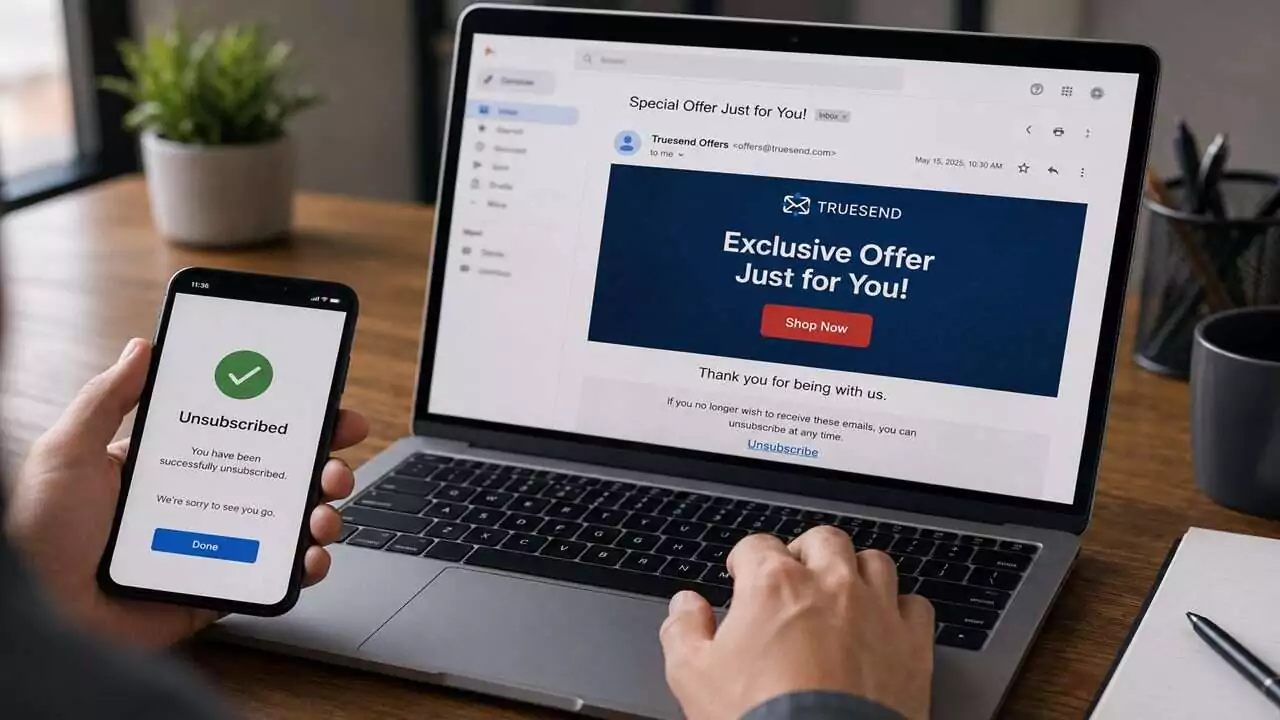
Senders now need a functioning one-click unsubscribe header that should be clearly visible in the email body itself as a “Unsubscribe” button. The rules state that a bulk email sender must process unsubscribe requests within two days. Thus, the era of burying the unsubscribe link or routing people to a landing page with a phone number instead of an actual opt-out is over.
Why Does This Matter Beyond Compliance?
It’s easy to treat this as a technical checklist for your IT team, but businesses doing well with email are treating it as a shift in how sender reputation is managed.
Besides this, if you think about the consumer side, when brand emails keep going to spam, more than half of people say they feel frustrated, lose trust in the brand, or unsubscribe. At the same time, over 70% of people check their spam folders to make sure they don’t miss important emails. So, landing in spam doesn’t just hurt deliverability; it also harms brand perception and hurts reader time.
This is precisely where the right infrastructure helps. Basically, it keeps you from constantly fixing authentication issues and helps you stay compliant more easily. So, you must know that “A modern email marketing platform should have domain authentication, list cleaning, and one-click unsubscribe built into its core system”, not added later after deliverability problems appear.
What to focus on & how Truesend can help?
Email marketing platform that works dedicatedly in managing email campaigns across multiple brands or business units, here’s where their focus should be:
Audit your authentication setup first
If SPF, DKIM, and DMARC aren’t configured and verified, this is non-negotiable because non-compliant traffic will be rejected completely rather than just being sent to spam. At TrueSend, you get easy SPF, DKIM, and DMARC setup support without extra effort.
Treat unsubscribe flows as a feature, not friction
Make sure your email header contains a visible unsubscribe option that is easy to find in every email. Also, set up an automated system to honour unsubscribe requests within 2 days instead of handling them manually. With Truesend’s email marketing features, managing unsubscribe issues is easy and comfortable.
Monitor spam complaint rates
You can use Google Postmaster Tools to track where you stand relative to the 0.1%–0.3% thresholds. You must segment your list aggressively to avoid emailing disengaged contacts who are more likely to hit “report spam.” Truesend provides a list segmentation feature that guides you on bulk email sending and helps in improving metrics.
Your email marketing platform matters
While choosing an Email Marketing Solution, you should look for Email Marketing Features that include built-in authentication support, automated list hygiene, real-time deliverability monitoring, and compliant unsubscribe management rather than retrofitting these protections yourself.
At Truesend, you get it all in one.
The Bigger Picture
When you look at this from a broad aspect, you will understand that these restrictions, introduced by Google, Yahoo, and Microsoft, are actually to improve the quality of inbox emails and standardise bulk emails sent via email marketing solutions.
These restrictions are not really about marketers but to help readers. Bulk email senders have been flooding inboxes with spam, phishing, and low-quality bulk mail for years. That is hitting the receiver’s trust over the inbox. But now, the brands that will treat authentication and consent as core to their sending strategy will be the ones whose emails actually get opened, read, and acted on.
In a landscape where inbox placement directly drives opens, clicks, and conversions, these fundamentals are not optional anymore. It’s simply how email marketing gonna work in 2026.